
KT Talks
FIFA World Cup 2026: A test bed for AI infrastructure and smart cities
How FIFA World Cup 2026 is stress-testing the AI infrastructure that will run tomorrow's cities and what it means for innovation ecosystems like Ras Al Khaimah

Subscribe to our newsletter
Subscribe to our newsletter
For the past several years, the dominant narrative around AI in the enterprise has been one of assistance. AI helps employees write faster, search faster and analyse faster. It reduces friction in workflows that were already designed around human execution. That was a meaningful first chapter. But it did not fundamentally change who or what was doing the work
We are now crossing that threshold.
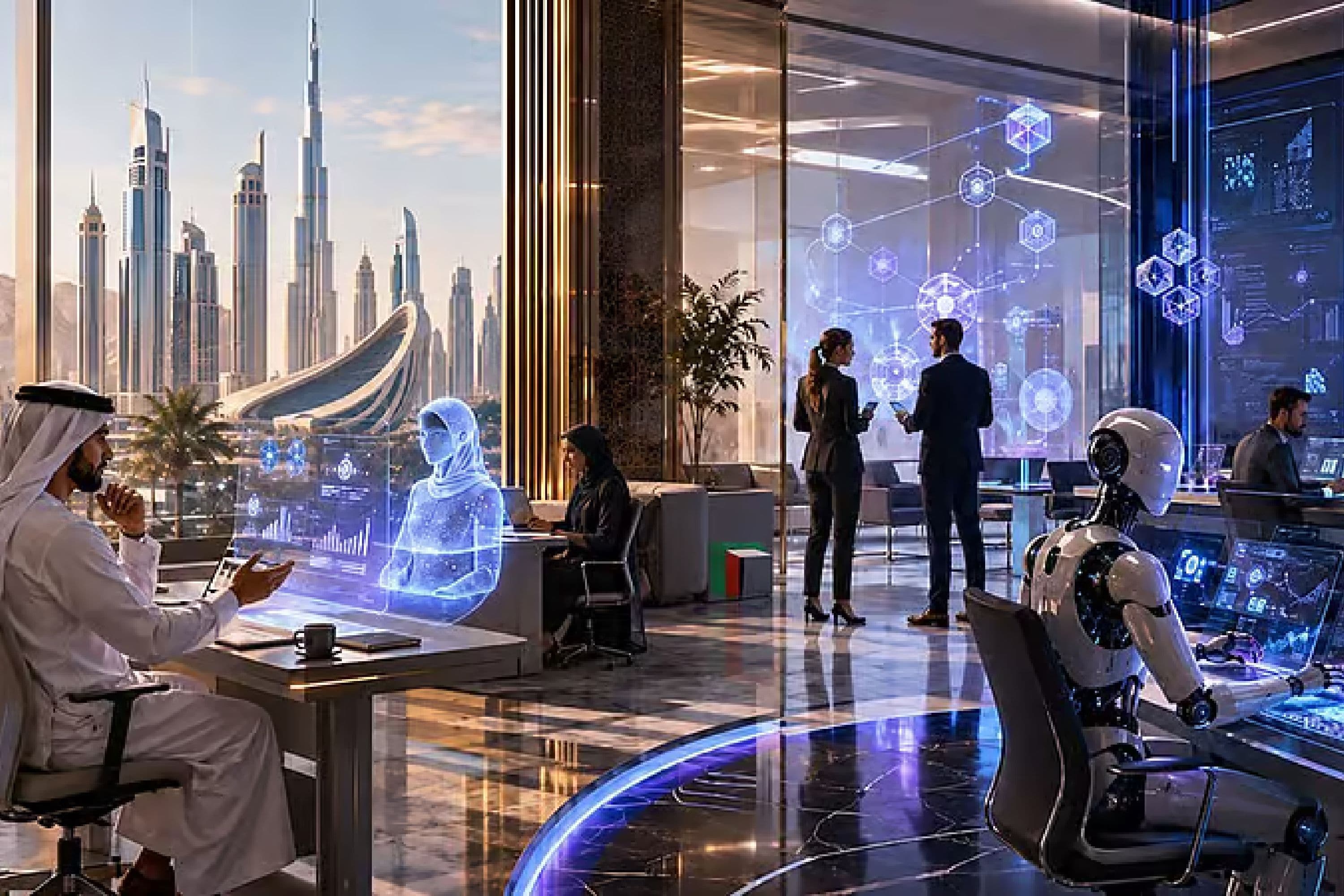
Agentic AI refers to systems capable of executing multi-step tasks autonomously, making decisions within defined parameters, and operating across existing tools without constant human input. These are not chatbots with better interfaces. They are systems that can be assigned work and complete it. The shift from AI as assistant to AI as autonomous operator is underway, and its implications for how businesses are structured, staffed, and managed are profound.
What makes the UAE context particularly significant is the pace and seriousness of the national response. The government has set clear directives to embed agentic AI across public services and operations, signaling not just ambition, but an expectation that the private sector will move at similar speed.
For UAE businesses, this national posture matters. When government is redesigning its own operating model around agentic AI, the commercial ecosystem around it must adapt accordingly. Procurement expectations, service delivery standards, and workforce models will all shift in response.
Within that national momentum, Innovation City in Ras Al Khaimah is translating ambition into infrastructure. A purpose-built free zone, focusing on AI, Web3, gaming, robotics and emerging technologies; where the companies developing and deploying agentic AI can establish, operate, and scale with the regulatory clarity and ecosystem support that this technology demands.
The transition to agentic AI is not simply a technology upgrade. It is an operational redesign.
Customer support may shift toward AI-led resolution for routine requests, with human teams concentrating on escalations and relationship management. Finance teams may see reconciliation handled continuously by autonomous systems, freeing professionals for strategic planning. Procurement can move from periodic manual review to an always-on evaluation process. On the commercial side, agentic AI can take over pipeline reporting, contract tracking, and performance monitoring; freeing sales and partnership teams to focus on what actually drives revenue: building relationships and closing deals.
In each case, the process itself must be rebuilt around oversight, measurable outcomes, and clear governance. The technology is becoming accessible. The organisational readiness to deploy it responsibly is the harder problem and where most businesses will either lead or fall behind.
The more accurate frame for agentic AI is not substitution. It is redesign. Repetitive and rules-based tasks are increasingly being handled by autonomous systems, allowing human teams to focus on judgment, stakeholder management, and strategic decision-making. The organisations that navigate this well will be those that deliberately rebuild roles around the new execution layer, not those that resist it.
From where I sit at Innovation City, the founders building these tools and the enterprises deploying them share one common challenge: ecosystem. The infrastructure, governance frameworks, and collaborative networks around your business will shape how quickly and effectively you scale agentic AI. This is precisely why Innovation City Ras Al Khaimah built for emerging technology, with the right partners, regulatory clarity, and community; is becoming more relevant, not less.
The shift from AI assistant to AI employee is happening now. The businesses that treat it as an operational transformation rather than a software decision will be the ones defining competitive advantage in the years ahead.
This article was originally published on Khaleej Times.
You can find the original version here.
KT Talks
How FIFA World Cup 2026 is stress-testing the AI infrastructure that will run tomorrow's cities and what it means for innovation ecosystems like Ras Al Khaimah

KT Talks
The next generation of economic and geopolitical leadership will be built not on what lies beneath the ground, but on the infrastructure powering artificial intelligence

Innovation City Team
Ras Al Khaimah (RAK) is quickly becoming one of the most attractive destinations for global startups. Once famous for its beaches, mountains, and tourism, the emirate is now emerging as a hub for innovation, entrepreneurship, and business-friendly policies. Startups around the world are discovering why RAK is the perfect place to launch and grow. Strategic Location for Global Reach